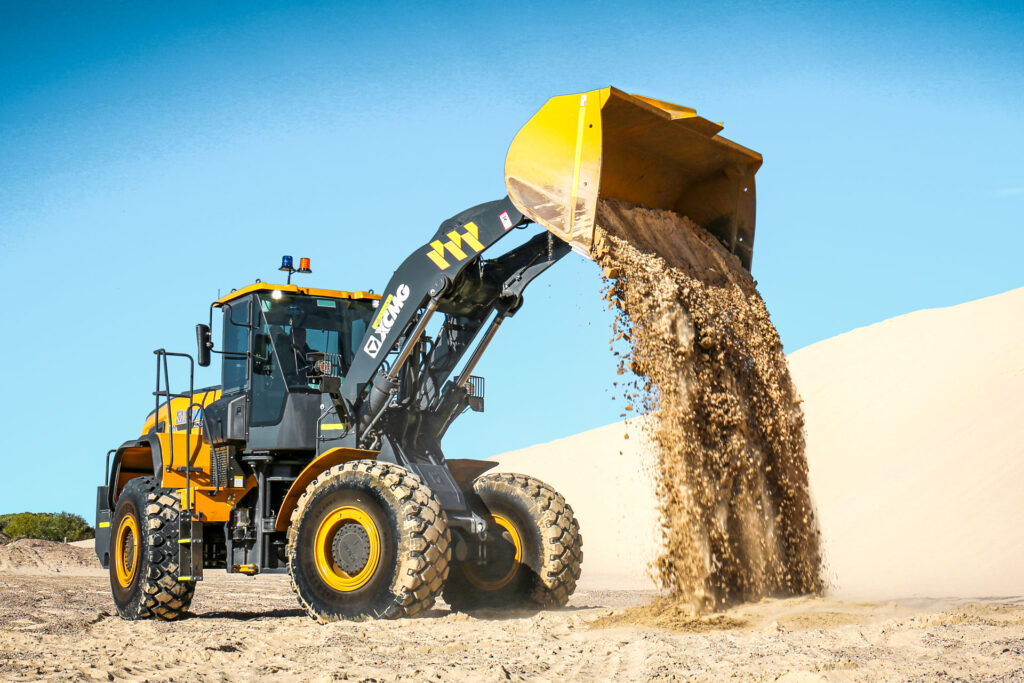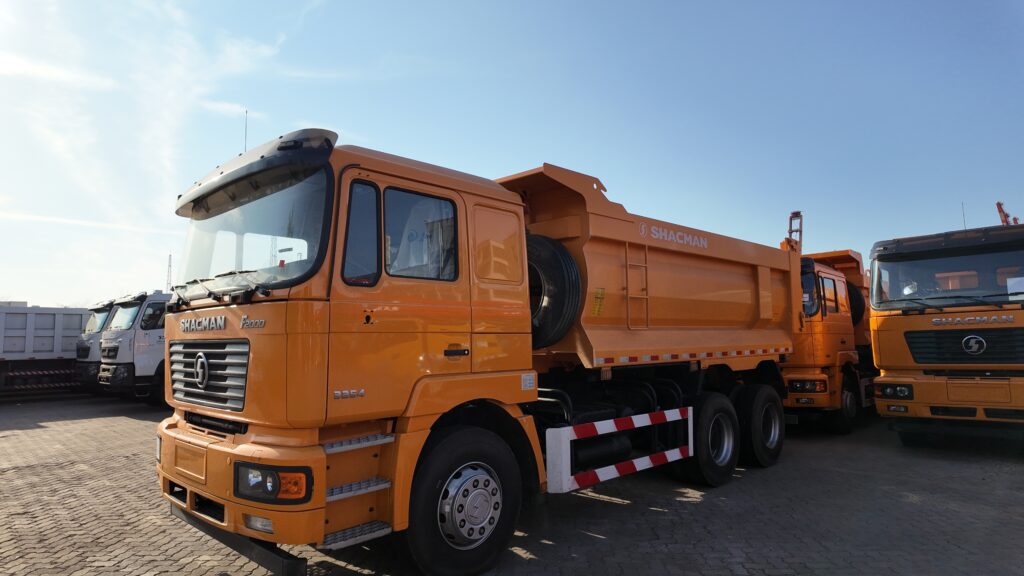
Buying a dump truck from China can be a practical option for African construction companies, mining contractors, transport operators, and equipment distributors. However, choosing the right vehicle involves more than comparing prices. Buyers need to consider operating conditions, payload requirements, vehicle configuration, import regulations, shipping costs, and after-sales support.
A dump truck that performs well on one project may not be suitable for another. Road conditions, material density, daily hauling distance, maintenance resources, and local vehicle regulations can all influence the best configuration.
This guide explains how to buy dump trucks from China for African markets, from defining your requirements and comparing specifications to verifying suppliers, estimating import costs, and arranging pre-shipment inspections.
Whether you are purchasing a single truck or planning a fleet purchase, the following steps will help you make a more informed procurement decision.
1. Why Buy Dump Trucks from China?
China offers international buyers access to a broad range of commercial vehicles, including heavy-duty dump trucks for construction, mining, quarrying, and bulk material transportation.
For African buyers, the main advantage is the ability to compare different vehicle configurations, equipment options, and supplier arrangements according to a project’s operational requirements and budget.
A Wide Range of Vehicle Configurations
Chinese suppliers offer dump trucks in different drive configurations, payload classes, engine specifications, and dump body designs. This allows buyers to evaluate vehicles for different applications instead of relying on a single standard configuration.
For example, a contractor transporting construction materials on mixed road conditions may have different requirements from a mining operator working with heavy materials on demanding haul routes.
Flexible Specification Options
Depending on the supplier and vehicle model, buyers may be able to select engine power, transmission, axle configuration, dump body dimensions, hydraulic systems, tires, and other components.
The key is to confirm these specifications in writing. Two trucks with similar model names may have different components or equipment packages.
Export-Oriented Purchasing
Experienced exporters can help coordinate vehicle specifications, commercial quotations, export documentation, inspection arrangements, and shipping.
Before placing an order, buyers should establish which services are included in the quotation and which responsibilities remain with the importer.
The most important principle is to evaluate the complete purchasing proposition, not just the initial vehicle price. A suitable configuration, transparent documentation, reliable parts support, and clear contractual terms can be more valuable than a low quotation with uncertain specifications.
2. Define Your Application Before Choosing a Dump Truck
Before contacting a dump truck supplier in China, identify how the vehicle will be used. This makes it easier to compare quotations accurately and avoid paying for unsuitable equipment.
Construction and Road Projects
Construction contractors may need dump trucks to transport sand, gravel, soil, crushed stone, and construction waste.
Important selection factors include:
- Required payload and dump body volume
- Road surface and site access
- Loading and unloading frequency
- Average hauling distance
- Turning space and maneuverability
- Availability of maintenance services
A truck operating on public roads and construction sites may require a different configuration from a vehicle working primarily inside a controlled project area.
Mining and Quarry Operations
Mining and quarry applications can place substantial demands on the chassis, suspension, tires, drivetrain, and hydraulic lifting system.
Buyers should assess the material being transported, road gradients, loaded travel distance, daily operating hours, and loading conditions.
Where abrasive materials or rough haul roads are involved, the durability of the dump body, tires, suspension, and other wear components deserves particular attention.
Sand, Gravel, and Bulk Material Transportation
For bulk material transportation, buyers should evaluate payload and body volume together.
The required body volume depends partly on material density. Heavy materials such as crushed stone may reach the permitted payload before the dump body is full, while lighter materials may fill the body before the vehicle reaches its weight limit.
Choosing the correct configuration helps reduce unnecessary trips while avoiding overloading.
Prepare a Purchasing Specification
Before requesting a quotation, prepare a basic specification sheet containing:
- Destination country and port
- Intended application
- Required vehicle quantity
- Preferred drive configuration
- Target payload and dump body volume
- Road and operating conditions
- Engine and transmission preferences
- New or used vehicle requirements, where applicable
- Expected delivery schedule
Providing these details helps a supplier recommend a suitable dump truck rather than quoting an unsuitable standard model.
3. How to Choose Between 6×4 and 8×4 Dump Trucks
One of the most common questions when buying a heavy-duty dump truck from China is whether to choose a 6×4 or an 8×4 configuration.
The right choice depends on the required payload, legal axle loads, operating environment, vehicle dimensions, and total operating cost.
What Is a 6×4 Dump Truck?
A typical 6×4 dump truck has three axles, with one front steering axle and two driven rear axles.
This configuration is commonly considered for general construction, aggregate transportation, and other heavy-duty hauling applications.
Potential advantages include a comparatively simpler axle arrangement and suitability for a range of construction and transport duties.
When evaluating a 6×4 dump truck, check the manufacturer’s rated specifications, axle capacities, engine performance, dump body design, and the legal loading limits applicable to your destination.
What Is an 8×4 Dump Truck?
A typical 8×4 dump truck has four axles, usually with two front steering axles and two driven rear axles.
It may be suitable for applications requiring a higher rated vehicle capacity or a larger dump body, provided that the vehicle specification and local regulations permit the intended operation.
However, additional axles do not automatically make an 8×4 truck the best choice. Purchase cost, tire replacement, maintenance, turning space, road restrictions, and actual loading requirements must also be considered.
6×4 vs. 8×4 Dump Truck: Key Differences
| Selection factor | 6×4 Dump Truck | 8×4 Dump Truck |
|---|---|---|
| Typical axle layout | Three axles | Four axles |
| Common applications | General construction and heavy-duty hauling | Applications requiring a different rated capacity or body configuration |
| Vehicle dimensions | Depends on the model | Often longer, depending on specification |
| Payload suitability | Must be verified against rated and legal limits | Must be verified against rated and legal limits |
| Purchase and maintenance costs | Compare actual quotation and service requirements | Compare actual quotation and service requirements |
| Best selection method | Match specifications to the project | Match specifications to the project |
There is no universal payload figure that applies to every 6×4 or 8×4 dump truck. Actual capacity depends on the chassis, axle ratings, body weight, equipment, vehicle gross weight limits, and destination-country regulations.
Practical recommendation: Request the technical specification sheets for both configurations and compare them against your intended material, operating conditions, and legal loading requirements before making a decision.
4. Which Dump Truck Specifications Should You Check?
After choosing a suitable configuration, review the main components that affect performance, durability, and operating costs.
Engine and Transmission
Engine power should be appropriate for the vehicle’s rated weight, road gradients, hauling distance, and operating cycle.
Ask the supplier to confirm the engine model, rated power, torque characteristics, transmission model, and applicable emissions specification.
A larger engine is not automatically the best option. The objective is to select a powertrain that can perform the required work efficiently and reliably.
Chassis and Axles
The chassis and axle configuration should be suitable for the intended loading conditions and road environment.
Review the rated axle capacities, wheelbase, suspension arrangement, braking system, and chassis specifications. For demanding operations, pay particular attention to the manufacturer’s recommendations for permitted loads and operating conditions.
Dump Body Dimensions and Material
Dump body selection should consider both volume and the type of material being transported.
Important questions include:
- What is the required internal body volume?
- What material will the truck carry?
- What is the approximate density of the material?
- Is a U-shaped or rectangular body more suitable?
- What body material and thickness are specified?
- What are the vehicle’s permitted payload and gross weight limits?
The correct body configuration depends on the application. Buyers should not assume that a larger body or thicker steel is always the best solution without considering material density, vehicle weight, and operating requirements.
Hydraulic Lifting System
The hydraulic system is essential to safe and reliable unloading.
Confirm the hydraulic cylinder configuration, lifting arrangement, rated operating requirements, and compatibility with the dump body.
Before shipment, the system should be inspected for leaks, abnormal movement, visible damage, and other issues identified by the agreed inspection procedure.
Tires, Brakes, and Suspension
Tire selection should reflect the operating surface, expected loads, and available replacement options.
The braking and suspension systems must match the vehicle specification and applicable safety requirements.
For buyers operating in remote project areas, the availability of replacement tires, brake components, filters, and suspension parts should also be considered.
5. How to Select a Dump Truck for African Operating Conditions
Africa includes many different operating environments, climates, road systems, and regulatory frameworks. A vehicle suitable for one country or project may not be appropriate for another.
For this reason, buyers should evaluate their actual destination and operating conditions rather than treating Africa as a single vehicle market.
Road Conditions and Terrain
Consider whether the truck will operate on paved roads, unpaved access roads, steep gradients, quarry roads, or mine haul routes.
These conditions influence tire selection, suspension requirements, engine performance, braking, and the suitability of the vehicle’s dimensions.
Climate and Air Filtration
High ambient temperatures, dust, and demanding operating cycles can affect maintenance requirements.
Discuss cooling system specifications, air filtration, maintenance intervals, and suitable operating procedures with the supplier.
For dusty environments, appropriate filtration and regular maintenance are especially important.
Fuel and Spare Parts Availability
Before choosing an engine and vehicle model, confirm that the required fuel specifications and replacement parts are accessible in the destination market.
Ask the supplier for a recommended spare parts list and clarify which maintenance items should be stocked locally.
Steering, Emissions, and Registration
Vehicle steering position, emissions requirements, lighting, dimensions, axle loads, and registration documents may be subject to destination-country rules.
Confirm these requirements before paying a deposit. If the vehicle cannot meet the relevant import or registration conditions, the resulting costs and delays can outweigh any initial price advantage.
6. How Much Does a Dump Truck from China Cost?
The price of a dump truck from China depends on the vehicle model, configuration, engine, dump body, component selection, order quantity, and commercial terms.
Shipping costs and destination charges can also have a substantial effect on the final purchasing budget.
Rather than relying on a generic online price, request an itemized quotation based on the actual specification you need.
What Determines the Dump Truck Price?
Common price factors include:
- Chassis and vehicle configuration
- Engine and transmission
- Dump body dimensions and material
- Hydraulic lifting system
- Tires, suspension, and other components
- Optional equipment and customization
- Vehicle condition, if purchasing a used truck
- Order quantity and delivery requirements
When comparing suppliers, confirm that each quotation covers the same or equivalent specifications. A lower price may reflect a different component package or different commercial terms.
FOB vs. CIF: What Is the Difference?
FOB and CIF are commonly used in international maritime trade. Buyers should understand their responsibilities before comparing quotations.
FOB (Free On Board): Under the agreed FOB term, the seller delivers the goods on board the vessel nominated by the buyer at the named port of shipment. The buyer generally arranges and pays for the main sea carriage and any insurance they choose to obtain.
CIF (Cost, Insurance and Freight): The seller arranges and pays for sea freight and the required insurance to the named destination port. However, under CIF, risk transfers to the buyer when the goods are loaded on board the vessel at the port of shipment. CIF does not automatically include destination import duties, taxes, or all local port and clearance charges.
For both terms, the exact responsibilities should be stated in the contract using the named port and the applicable Incoterms® rules.
Calculate the Total Landed Cost
The purchase price alone does not show the full cost of importing a dump truck.
A more useful calculation is:
Total landed cost = Vehicle price + Export and shipping costs + Insurance + Destination charges + Import duties and taxes + Clearance and registration costs + Other applicable expenses
Depending on the transaction, additional expenses may include inspection fees, port storage, inland transportation, and initial spare parts.
Import duties, taxes, and compliance costs vary by destination and vehicle classification. Confirm them with a local customs broker or relevant authority before finalizing your budget.
7. How to Choose a Reliable Dump Truck Supplier in China
Selecting a supplier requires more than reviewing product photos or comparing quotations. Buyers should verify the company’s identity, technical capability, documentation, and ability to fulfill the agreed order.
Verify the Company and Export Experience
Request the supplier’s registered business information and confirm that the contracting entity matches the company named in the quotation and sales contract.
Ask about its experience exporting the relevant vehicle type and serving your destination market.
Where appropriate, request verifiable references or examples of previous shipments, with commercially sensitive information removed.
Confirm the Technical Specifications in Writing
The quotation and sales contract should clearly identify the vehicle model, configuration, major components, agreed options, and relevant technical parameters.
For multiple-unit orders, specify whether all vehicles must have identical configurations and how any substitutions will be approved.
Avoid relying solely on general product descriptions such as “heavy-duty dump truck” or “high-quality chassis.”
Request Photos, Videos, and Inspection Evidence
Request recent photographs and videos of the actual vehicle or production unit.
Depending on the purchase, useful evidence may include the chassis, engine identification, dump body, hydraulic system, tires, vehicle identification number, and functional test results.
An independent pre-shipment inspection can provide additional assurance when the order value or purchasing risk justifies it.
Clarify Warranty and After-Sales Support
Before ordering, establish the warranty scope, applicable exclusions, claim process, and responsibility for replacement parts and related costs.
Ask whether recommended maintenance information, technical documentation, and spare parts can be provided.
A clear after-sales arrangement is particularly important for businesses that rely on their trucks to meet project deadlines.
Review Payment and Contract Terms
The contract should identify the parties, vehicle specifications, total price, delivery terms, payment milestones, inspection arrangements, shipping documents, and remedies for agreed non-conformity.
Use a payment process that can be verified and documented. Confirm beneficiary details independently and be cautious of unexpected requests to transfer funds to a different account.
8. Dump Truck Inspection Checklist Before Shipment
A pre-shipment inspection helps buyers confirm that the vehicle matches the agreed specification before it leaves China.
The inspection scope should reflect the vehicle type, whether it is new or used, the purchase contract, and the intended application.
Vehicle and Chassis
- Confirm the vehicle model and identification details.
- Compare the actual configuration with the agreed specification.
- Inspect the chassis and visible structural components.
- Check the condition of accessible fasteners, connections, and mounting points.
- Verify that the vehicle documents match the vehicle being shipped.
Engine and Drivetrain
- Check for visible leaks and damage.
- Review engine and transmission identification where applicable.
- Start and operate the vehicle according to the agreed inspection procedure.
- Check for abnormal noises, warning indicators, and visible exhaust abnormalities.
- Confirm the relevant functional test results.
Dump Body and Hydraulic System
- Verify the dump body dimensions and agreed construction specifications.
- Inspect visible welds and structural components.
- Raise and lower the body under the approved test conditions.
- Check hydraulic hoses, cylinders, and connections for leaks or damage.
- Confirm that the lifting mechanism operates as expected.
Safety Systems and Equipment
- Check the brakes according to the agreed test procedure.
- Inspect tires, wheels, lights, mirrors, and electrical equipment.
- Confirm that required tools and accessories are included.
- Check that the required documents and agreed spare parts are ready for delivery.
Document the inspection results and record any outstanding issues. If corrective work is required, agree on the remedy and verification process before shipment.
9. How to Import a Dump Truck from China to Africa
The import process generally involves several stages, but the precise requirements depend on the vehicle, destination country, shipping method, and contract.
Step 1: Define Your Requirements
Identify the intended application, vehicle configuration, quantity, destination port, and applicable import requirements.
Step 2: Request and Compare Quotations
Ask qualified suppliers to quote against the same specification. Compare vehicle details, commercial terms, delivery schedules, and included services.
Step 3: Confirm the Contract and Payment Terms
Review the final specification, payment schedule, inspection arrangements, shipping responsibilities, and documentation requirements before making payment.
Step 4: Arrange Production or Vehicle Preparation
For a new vehicle, confirm the production schedule and agreed specifications. For a used vehicle, confirm its condition and any agreed repairs or preparation work.
Step 5: Complete the Pre-Shipment Inspection
Inspect the vehicle against the contract and resolve any identified discrepancies according to the agreed procedure.
Step 6: Arrange Shipping and Export Documentation
Coordinate the shipping method, vessel booking, export clearance, and required shipping documents with the supplier and freight forwarder.
Depending on the transaction and destination, documents may include a commercial invoice, bill of lading, certificate of origin, vehicle technical documents, and applicable inspection or conformity certificates.
Step 7: Complete Import Clearance and Registration
Before the shipment arrives, coordinate with your local customs broker to confirm the applicable duties, taxes, permits, inspection requirements, and vehicle registration procedures.
Do not assume that the same documents or vehicle eligibility rules apply across all African countries.
10. Common Mistakes to Avoid When Buying Dump Trucks from China
Even experienced buyers can encounter problems when vehicle requirements or commercial terms are unclear.
Choosing based only on the lowest price. Compare specifications, inspection arrangements, warranty conditions, and total landed cost rather than the headline price alone.
Ignoring local regulations. Confirm vehicle eligibility, emissions requirements, permitted axle loads, and registration conditions before placing the order.
Confusing body volume with legal payload. A larger dump body does not necessarily permit a higher legal load. Material density and vehicle weight limits must be considered together.
Accepting vague specifications. Make sure the contract identifies the actual configuration and agreed components rather than relying on a model name alone.
Skipping inspection. Arrange an appropriate inspection and document any discrepancies before shipment.
Underestimating after-sales requirements. Check the availability of replacement parts, technical support, and maintenance information before committing to the vehicle.
Misunderstanding shipping terms. Confirm exactly which costs, risks, and responsibilities are allocated to each party under the agreed Incoterms® rule.
A clear specification, documented inspection, and well-defined contract can help prevent many avoidable procurement problems.
11. Frequently Asked Questions About Buying Dump Trucks from China
How do I buy a dump truck from China for Africa?
Start by defining your application, required configuration, payload, destination country, and budget. Compare quotations from verifiable suppliers, confirm local import requirements, review the contract, and arrange an appropriate pre-shipment inspection before shipping.
Which is better for African markets: a 6×4 or an 8×4 dump truck?
Neither configuration is universally better. A 6×4 may suit many general construction and hauling applications, while an 8×4 may be appropriate for projects requiring a different rated capacity or body configuration. The best choice depends on vehicle specifications, legal loading limits, road conditions, and operating costs.
How much does it cost to import a dump truck from China?
The total cost depends on the vehicle specification, order quantity, shipping method, insurance, destination port charges, customs duties, taxes, and local clearance costs. Request an itemized quotation and verify destination charges before finalizing your budget.
What should I check before buying a dump truck from China?
Check the supplier’s business information, written technical specifications, vehicle identification details, chassis, engine, transmission, dump body, hydraulic system, brakes, tires, and required documents. Consider an independent inspection before shipment.
What documents are needed to import a dump truck into an African country?
The required documents depend on the destination country, vehicle classification, and import procedure. Common commercial and shipping documents may include a commercial invoice, bill of lading, certificate of origin, and vehicle technical documents. Additional permits, inspections, or conformity documents may be required.
Can I request a customized dump truck configuration?
Depending on the supplier and model, customization may be available for components such as the engine, transmission, axle configuration, dump body, tires, and other equipment. Confirm technical feasibility, price, production time, and local compliance before placing the order.
How can I get an accurate dump truck quotation from China?
Provide your destination country and port, intended application, preferred configuration, quantity, payload requirements, and any special technical specifications. Also clarify whether you need an FOB or CIF quotation and whether additional documentation or inspection services are required.
Conclusion: Find the Right Dump Truck Supplier in China
Buying a dump truck from China for an African project requires careful planning, from selecting the right configuration to verifying the supplier and calculating the total import cost.
The best purchasing decision is not necessarily the vehicle with the lowest initial price. It is the vehicle that meets your operational requirements, complies with local regulations, fits your budget, and can be supported throughout its working life.
By defining your requirements, comparing specifications, checking the supplier, and arranging a documented pre-shipment inspection, you can make a more informed purchasing decision.