
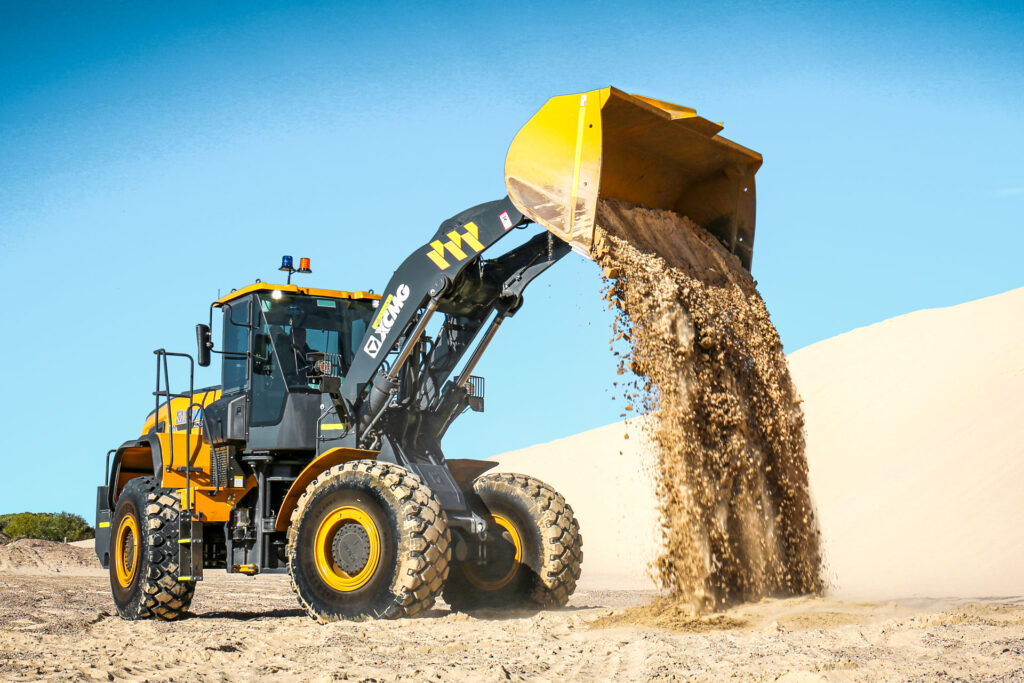
Buying a wheel loader from China can be a cost-effective option for construction companies, mining contractors, equipment distributors, and international importers. Chinese manufacturers offer a wide range of wheel loaders with different operating capacities, engine configurations, bucket sizes, and optional attachments. However, choosing the right machine requires more than comparing quotations from different suppliers.
To make a successful purchase, buyers need to evaluate the machine’s working conditions, technical specifications, manufacturing quality, spare parts availability, export experience, and total cost of ownership. It is equally important to verify the supplier, understand international shipping terms, and confirm the equipment’s compliance with local import regulations.
This guide explains how to buy a wheel loader from China, how to compare Chinese wheel loader manufacturers, what to check before placing an order, and how to avoid common purchasing mistakes.
1. Why Buy a Loader from China?
China has developed a substantial construction machinery manufacturing industry, supplying equipment to domestic and international markets. For overseas buyers, sourcing a wheel loader from China may offer access to a broad selection of machines, competitive manufacturing costs, flexible configurations, and a variety of suppliers.
However, the advantages of buying from China depend on the manufacturer, the machine specification, the destination market, and the level of after-sales support available.
1.1 Competitive Pricing and Equipment Selection
One reason international buyers search for affordable wheel loaders from China is the availability of different equipment configurations across multiple price ranges.
Depending on the manufacturer, buyers may find compact wheel loaders for small construction projects, medium-sized machines for general material handling, and heavy-duty wheel loaders for demanding applications such as mining and quarrying.
The important point is to compare machines with equivalent specifications. Two loaders may have similar purchase prices but differ significantly in engine output, rated operating capacity, hydraulic performance, component quality, and expected maintenance requirements.
When comparing Chinese wheel loader prices, request a detailed quotation that identifies the engine model, bucket capacity, operating weight, transmission configuration, tires, attachments, warranty, and included spare parts.
1.2 Customization and OEM Manufacturing Options
Some Chinese wheel loader manufacturers offer equipment customization to meet different operating conditions and market requirements.
Depending on the manufacturer’s capabilities, available options may include different bucket sizes, tire configurations, enclosed or open operator cabins, air conditioning, hydraulic attachments, and cold-weather packages.
For buyers importing wheel loaders into regions with high temperatures, dusty environments, or demanding work cycles, it is particularly important to discuss the suitability of the cooling system, air filtration, hydraulic components, and engine configuration before ordering.
Buyers seeking OEM wheel loader manufacturing in China should also clarify branding requirements, product identification plates, manuals, packaging, and any documentation needed for local distribution.
1.3 Access to International Export Suppliers
Many Chinese construction machinery suppliers have experience preparing equipment for overseas delivery. Depending on the supplier and destination, they may assist with export documentation, container loading, shipping arrangements, spare parts packages, and technical communication.
Nevertheless, export experience should be verified rather than assumed. Ask whether the supplier has shipped similar machines to your country or region and whether it can provide relevant documentation and references.
2. Step One: Identify Your Project Requirements
Before contacting a wheel loader supplier in China, define what the machine needs to accomplish. A loader that performs well on a construction site may not be the most economical choice for a quarry, agricultural operation, or bulk-material handling facility.
The correct selection begins with the working environment, material characteristics, loading cycle, and expected operating hours.
2.1 Choose a Loader Based on Its Application
Different applications create different equipment requirements.
Construction and infrastructure projects
Construction sites often require a versatile wheel loader for moving sand, gravel, soil, crushed stone, and construction materials. Buyers should consider bucket capacity, maneuverability, lifting performance, and compatibility with the site’s trucks or transport equipment.
Mining and quarry operations
Mining and quarry applications may involve abrasive materials, uneven ground, heavy loading cycles, and extended operating hours. When purchasing a wheel loader for mining, evaluate structural durability, axle and drivetrain specifications, tire suitability, cooling performance, and maintenance accessibility.
A machine designed for general construction should not automatically be assumed suitable for intensive quarry work.
Agriculture and material handling
Agricultural operations may prioritize maneuverability, attachment compatibility, and the ability to handle feed, fertilizer, soil, or other bulk materials. Buyers should assess the material density and whether a standard bucket or a specialized attachment is more appropriate.
Ports, warehouses, and industrial facilities
Industrial material handling may require specific bucket geometries, different tires, or attachments designed for repetitive loading and unloading. Operating space, floor conditions, and material characteristics should guide the selection.
2.2 Select the Appropriate Wheel Loader Size
The most suitable wheel loader is not necessarily the largest machine within your budget. Oversized equipment can increase fuel consumption, tire expenses, transportation costs, and purchase price. Undersized equipment may require more loading cycles and reduce overall productivity.
When comparing small, medium, and heavy-duty wheel loaders, evaluate:
- The average and maximum material weight handled per cycle.
- The required bucket capacity and material density.
- The height and reach needed to load trucks.
- The available working space and ground conditions.
- The expected number of operating hours per day.
- The required production rate in tons per hour or cubic meters per hour.
For example, a buyer handling lightweight agricultural materials may need a larger-volume bucket without requiring the same breakout force as a quarry operator handling dense rock.
Bucket capacity alone does not determine how much material a loader can safely carry. The machine’s rated operating capacity, stability, attachment design, and manufacturer specifications must also be considered.
2.3 Understand the Key Technical Specifications
When evaluating wheel loader technical specifications, pay particular attention to the following parameters.
| Specification | Why It Matters |
|---|---|
| Operating weight | Influences stability, ground pressure, transport requirements, and working conditions. |
| Rated operating capacity | Helps determine the machine’s intended load-handling capability. |
| Bucket capacity | Affects material volume handled per cycle. |
| Engine power and torque | Influence performance under different loads and operating conditions. |
| Dumping height and reach | Determine compatibility with truck loading and material placement. |
| Hydraulic performance | Affects lifting, bucket movement, and attachment operation. |
| Transmission and axles | Influence traction, durability, and performance on different surfaces. |
| Fuel consumption | Contributes directly to long-term operating costs. |
| Tire specifications | Affect traction, wear, stability, and suitability for the working surface. |
Do not compare rated operating capacities, bucket volumes, or engine power figures without checking the definitions and test conditions used by each manufacturer.
2.4 Prepare a Technical Requirement Sheet
Before requesting quotations, prepare a short specification sheet containing the intended application, material type, target bucket capacity, rated operating capacity, required dumping height, engine requirements, operating environment, and destination country.
This helps Chinese wheel loader suppliers recommend comparable configurations and reduces the risk of receiving quotations for machines that are unsuitable for your project.
3. Step Two: Compare Wheel Loader Manufacturers in China
Finding a supplier is relatively easy. Identifying a reliable manufacturer that can deliver the promised machine, documentation, and after-sales support requires more careful evaluation.
When searching for a reliable wheel loader manufacturer in China, buyers should examine the company’s legal identity, manufacturing capabilities, quality control procedures, export experience, and technical support arrangements.
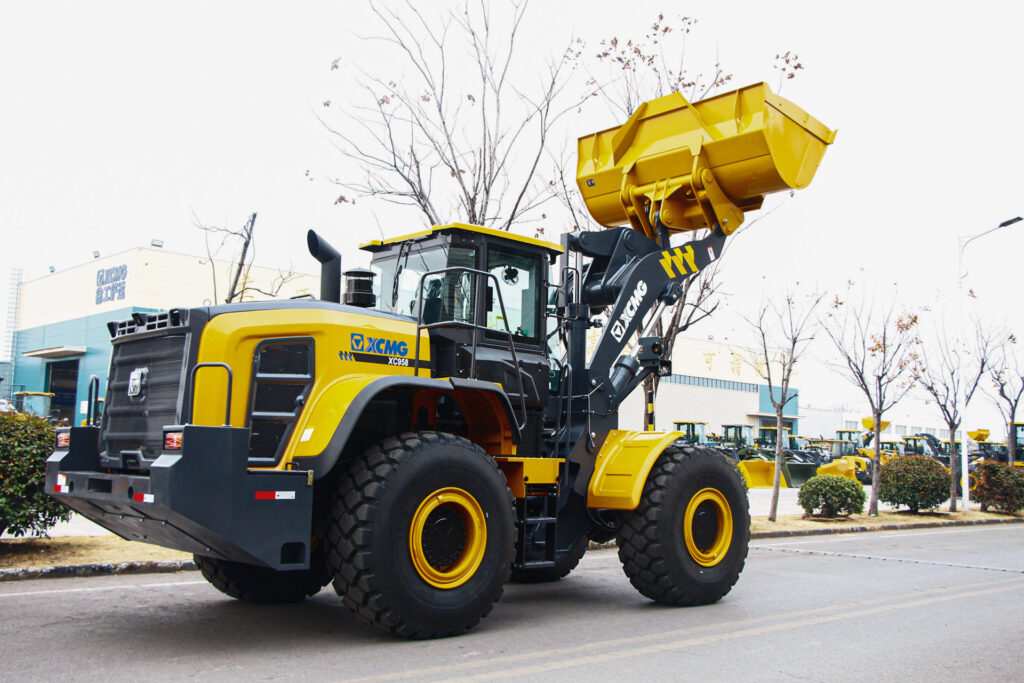
3.1 Manufacturer vs. Trading Company
Both manufacturers and trading companies can serve international buyers, but their capabilities may differ.
A direct manufacturer may provide closer access to production information, configuration discussions, factory inspections, and technical staff. It may also be able to customize equipment according to its manufacturing capabilities.
A trading company may offer several brands, consolidate orders, communicate in multiple languages, or help buyers source different types of machinery. Its value depends on its supplier network, technical understanding, and ability to manage the transaction.
Neither business model guarantees reliability. A factory can still provide poor service, while a competent trading company may offer effective purchasing support.
To verify whether a Chinese wheel loader supplier is a manufacturer or intermediary, request its registered company details, factory address, production information, and authorization documents where applicable. Arrange a video inspection or an independent factory visit if the order value justifies it.
3.2 How to Verify a Chinese Wheel Loader Supplier
Before placing an order, use a structured supplier verification process.
Check business registration. Confirm the legal company name, registered address, and business status using appropriate official records. Make sure the entity named in the quotation and contract matches the company receiving payment or is otherwise clearly identified in the contractual arrangement.
Review manufacturing capabilities. Request information about assembly facilities, production processes, quality inspections, and component sourcing. Ask which operations are performed in-house and which components are purchased from external suppliers.
Inspect product documentation. Request technical data sheets, machine identification information, operating manuals, maintenance instructions, and applicable certificates. Confirm that documents relate to the actual model and configuration being offered.
Review export experience. Ask about previous shipments to your target market, experience with export packaging, and familiarity with the documentation required for your destination.
Check communication quality. A reliable supplier should be able to explain specifications clearly, answer technical questions, and document agreed changes in writing.
3.3 Questions to Ask Before Choosing a Supplier
Before comparing final quotations, ask each supplier the same essential questions:
- What is the exact model and configuration of the proposed wheel loader?
- Which engine, transmission, axle, and hydraulic components are installed?
- What are the rated operating capacity, bucket capacity, and dumping height?
- What warranty terms apply, and which components are covered?
- Can the supplier provide recommended spare parts and maintenance schedules?
- Are replacement parts available for the destination market?
- Can the supplier provide pre-shipment inspection photos and videos?
- What are the production lead time, payment terms, and delivery conditions?
- Can the supplier provide references or evidence of relevant export experience?
Standardizing these questions makes it easier to compare suppliers on a like-for-like basis rather than relying on promotional descriptions.
4. Step Three: Evaluate Quality, Performance, and Reliability
The purchase price of a wheel loader represents only part of its economic value. Equipment quality affects uptime, repair costs, productivity, resale value, and the total cost of ownership over the machine’s service life.
When buying a wheel loader from China, buyers should focus on the complete machine rather than evaluating it solely by engine brand or exterior appearance.
4.1 Engine and Hydraulic System
The engine must provide sufficient power for the intended work without creating unnecessary operating expenses. Consider rated power, torque characteristics, cooling capacity, fuel requirements, and the availability of local maintenance support.
Hydraulic performance is equally important because the hydraulic system controls lifting and bucket movement. Buyers should ask about hydraulic pump specifications, system design, operating pressure, and the availability of replacement components.
For demanding applications, request performance information relevant to the expected work cycle rather than relying on maximum power figures alone.
4.2 Structural Strength and Component Quality
The frame, loader arms, bucket, pins, bushings, axles, and drivetrain experience different stresses depending on the working environment.
For quarry and mining applications, ask about the suitability of the frame and bucket design for abrasive materials, repeated loading, and uneven ground. For general construction, evaluate the balance between structural durability, maneuverability, and operating efficiency.
Request documentation of applicable quality control procedures and inspect welds, joints, hoses, connections, and accessible components before shipment.
A photograph of a finished machine cannot establish its internal component quality or long-term durability. Where possible, use a documented inspection and verify the actual model and configuration.
4.3 Fuel Efficiency and Maintenance Costs
Fuel consumption varies with machine configuration, material density, operator behavior, idle time, ground conditions, and loading cycles.
To compare fuel efficiency between Chinese wheel loader models, ask suppliers for the conditions behind any quoted consumption figures. Avoid treating a single fuel-consumption number as a guaranteed result under every operating condition.
A more useful comparison considers estimated annual operating hours, fuel consumption under comparable workloads, scheduled maintenance, tire replacement, and expected downtime.
For example, if a machine operates for many hours each day, a modest difference in fuel use can become financially significant over several years. However, a lower quoted consumption figure should not outweigh inadequate production capacity or poor service support.
4.4 Safety Features and Operator Comfort
Operator comfort can influence productivity and fatigue during long shifts. Evaluate cabin visibility, seat adjustment, controls, ventilation, air conditioning, and noise levels.
Safety requirements vary by machine configuration, application, and destination market. Depending on the intended use, buyers may need to review rollover and falling-object protection, braking systems, lighting, reversing alarms, visibility provisions, and other relevant safety features.
Do not assume that every machine automatically complies with the regulations in the importing country. Confirm the applicable standards and documentation before ordering.
4.5 Spare Parts Availability and Service Life
A wheel loader that cannot be repaired quickly may create substantial indirect costs, especially at remote construction sites or mines.
Before purchasing, obtain a recommended spare parts list covering routine maintenance items and likely wear components. Ask about part numbers, prices, availability, lead times, and shipping arrangements.
Clarify whether technical support is available remotely and whether local technicians can maintain the machine using the supplied manuals and diagnostic information.
For international buyers, spare parts availability and after-sales support should be treated as purchasing criteria, not optional extras.
5. Step Four: Understand Wheel Loader Prices and Total Costs
One of the most common questions among overseas buyers is how much a wheel loader costs in China. There is no single price that applies to every model because equipment size, configuration, component selection, attachments, order quantity, and commercial terms can vary substantially.
The most reliable approach is to request a detailed quotation for a clearly defined machine and calculate the total cost of acquiring and operating it.
5.1 What Determines Wheel Loader Prices in China?
Several factors influence the price of a Chinese wheel loader.
Machine size and rated capacity: Larger machines generally require more material, stronger structures, and more powerful systems, affecting their purchase and transport costs.
Engine and component configuration: Different engine specifications, transmissions, hydraulic systems, axles, and tires can produce significant price differences.
Bucket and attachment options: Specialized buckets, forks, quick couplers, and other attachments may increase the purchase price but improve suitability for particular jobs.
Brand and quality assurance: Manufacturing processes, quality control, component selection, and technical support can affect pricing.
Customization and order quantity: Special configurations, branding, documentation, and multiple-unit orders may influence production costs and commercial terms.
When requesting a quotation for a wheel loader from China, ask the supplier to separate the base machine price from optional attachments, spare parts, and additional services.
5.2 Calculate the Total Cost of Ownership
The total cost of ownership includes more than the initial purchase price.
| Cost Category | Items to Consider |
|---|---|
| Equipment purchase | Base machine, selected configuration, attachments |
| Export preparation | Inspection, packaging, inland transportation, export handling |
| International shipping | Ocean freight, cargo insurance, applicable handling charges |
| Import costs | Customs duties, taxes, clearance fees, regulatory compliance |
| Operating expenses | Fuel, lubricants, tires, routine maintenance |
| Repair and downtime | Replacement parts, labor, lost productive hours |
| End-of-life value | Expected resale value, if relevant to the purchasing decision |
Not every expense applies in the same way to every shipment. The agreed Incoterm, route, destination, customs classification, and local regulations determine which costs and responsibilities apply.
A practical comparison should estimate costs over the same ownership period and use comparable assumptions for operating hours, fuel prices, maintenance, and productivity.
5.3 How to Compare Quotations from Different Suppliers
Suppose three suppliers quote different prices for what they describe as the same wheel loader. The cheapest quotation may exclude attachments, spare parts, or export handling, while a higher quotation may include additional items.
Before choosing a supplier, compare:
- Exact machine model and technical specifications.
- Engine, hydraulic system, transmission, tires, and bucket configuration.
- Included attachments, tools, and spare parts.
- Warranty coverage and after-sales support.
- Production schedule and inspection arrangements.
- Incoterm, named delivery location, and included charges.
- Payment schedule and contract terms.
A clear quotation comparison prevents buyers from confusing a lower initial price with a lower overall cost.
6. Step Five: Understand Export, Shipping, and Import Procedures
Importing a wheel loader from China requires coordination between the supplier, freight forwarder, customs broker, and buyer. The exact process depends on the destination country, shipping method, equipment configuration, and agreed commercial terms.
Before paying a deposit, confirm the proposed shipping plan and identify which party is responsible for each stage.
6.1 Request a Formal Quotation and Proforma Invoice
A formal quotation should identify the seller, model, specifications, quantity, price, currency, delivery terms, production lead time, and quotation validity.
The proforma invoice should reflect the agreed transaction details. If customization or optional equipment is involved, include the relevant configuration in the contractual documents rather than relying on informal messages.
Before transferring funds, verify the beneficiary details and ensure that payment arrangements are consistent with the contract.
6.2 Understand EXW, FOB, CIF, and DAP
International buyers often compare Chinese wheel loader suppliers using different Incoterms. These terms allocate specified costs, responsibilities, and risks between the seller and buyer.
- EXW (Ex Works): The seller makes the goods available at the agreed location. The buyer generally assumes substantial responsibility for collection and onward transportation.
- FOB (Free on Board): For applicable sea or inland waterway transport, the seller delivers the goods on board the vessel at the named port, with risk transferring according to the rule.
- CIF (Cost, Insurance and Freight): For applicable sea or inland waterway transport, the seller arranges and pays freight and the specified insurance to the named destination port, but risk generally transfers when the goods are on board at the shipment port.
- DAP (Delivered at Place): The seller arranges delivery to the named destination, ready for unloading. The buyer generally handles import clearance and applicable import duties and taxes.
These terms should be used with a clearly named place or port and the appropriate Incoterms edition. They do not replace a complete sales contract.
For example, a CIF quotation does not mean the seller retains transit risk until the cargo reaches the destination port. Buyers should understand the distinction between who pays for freight and when risk transfers.
6.3 Choose the Right Shipping Method
The most suitable shipping method depends on machine dimensions, weight, loading arrangements, destination, and transport cost.
Depending on the equipment and carrier, possible options include containerized shipping, flat-rack containers, or roll-on/roll-off services. Oversized machines may require specialized arrangements.
Ask the supplier or freight forwarder to confirm the actual machine dimensions, shipping weight, loading method, securing requirements, and any restrictions imposed by the carrier.
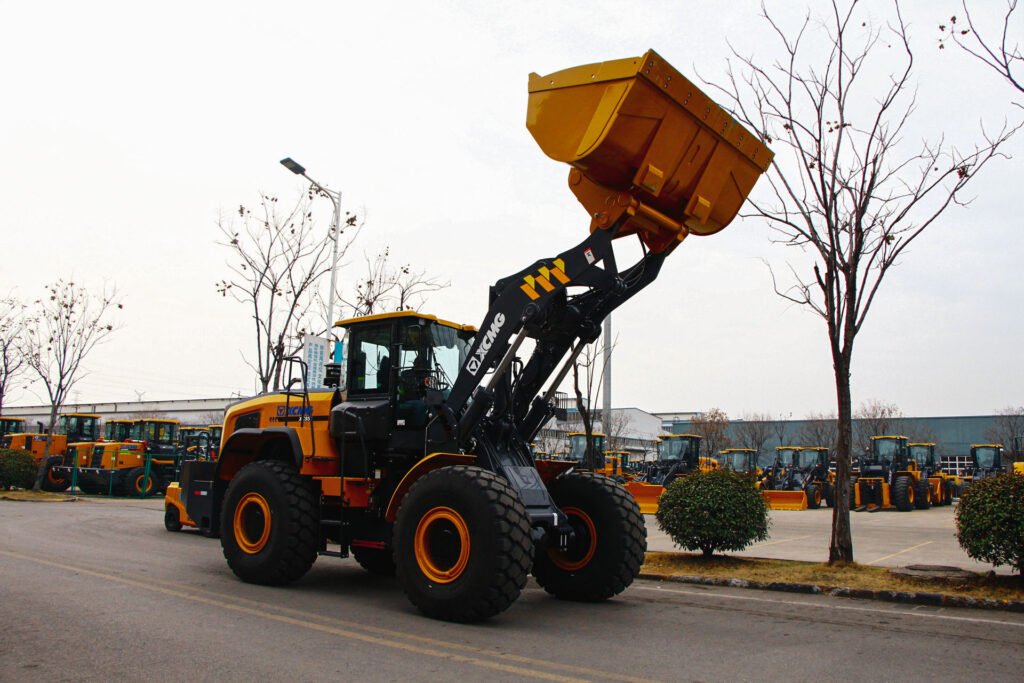
Before approving the shipment, verify the destination port, estimated transit time, freight quotation validity, insurance arrangements, and potential destination charges.
6.4 Prepare Export and Import Documentation
Common documents may include a commercial invoice, packing list, bill of lading, sales contract, and applicable export or import declarations. Additional certificates, origin documents, or technical documentation may be required depending on the transaction and destination.
Buyers should confirm the relevant requirements with their customs broker or the importing country’s official authorities before shipment.
Customs classification is especially important because the tariff code can affect import duties, taxes, documentation, and regulatory treatment. Do not rely solely on a supplier’s informal description of the equipment when determining the correct classification.
6.5 Check Local Import Regulations and Certification Requirements
Before buying a wheel loader from China, confirm whether the destination country imposes requirements relating to emissions, machinery safety, noise, product certification, labeling, or used-equipment imports.
Requirements may differ between new and used machines and between different engine configurations.
A supplier’s existing certificates should not be assumed to satisfy every country’s regulations. Confirm the applicable requirements for the exact model before making a non-refundable commitment.
7. Step Six: Inspect the Loader Before Shipment
Pre-shipment inspection helps buyers verify that the equipment matches the agreed specification and identify visible defects before the machine leaves China.
An inspection should be based on a written checklist rather than a general statement that the machine has passed quality control.
7.1 Verify the Actual Machine Configuration
Compare the finished machine with the purchase contract and approved technical specification sheet.
Check the model, identification number, engine details, bucket capacity, tires, attachments, cabin configuration, and other agreed features. If a substitute component has been proposed, obtain written approval before accepting it.
7.2 Request Photos and Videos of the Actual Machine
Ask for recent photos and videos showing the actual machine being supplied, not only catalog images.
Useful evidence includes:
- Exterior views from all sides.
- Engine compartment and accessible components.
- Tires, bucket, loader arms, and visible hydraulic connections.
- Identification plates and relevant component labels.
- Dashboard, controls, lights, and operating-hour display where applicable.
- Functional demonstrations of lifting, bucket movement, steering, and braking where safe and appropriate.
Photos and videos provide useful preliminary evidence, but they cannot replace a competent physical inspection.
7.3 Conduct a Pre-Shipment Inspection
Depending on order value and risk, buyers may arrange inspection by their own technical team, a qualified independent inspector, or another agreed inspection provider.
The inspection scope should identify the tests to be performed, acceptance criteria, reporting format, and procedure for handling defects.
For a new wheel loader, the inspection may cover visible structural condition, fluid leaks, controls, safety equipment, documentation, and functional testing under suitable conditions.
For used wheel loaders, additional checks may be necessary for wear, engine condition, hydraulic performance, drivetrain operation, structural repairs, and maintenance history.
7.4 Check Spare Parts, Accessories, and Packaging
Before loading, confirm that all agreed accessories, manuals, spare parts, tools, and documentation are included.
Verify the packing list and inspect the machine’s securing and protection arrangements. Depending on the shipping method, the supplier and freight forwarder should address movement during transit, exposure to moisture, corrosion protection, and applicable shipping restrictions.
Record the final machine condition and loading process with dated photographs where practical.
7.5 Confirm Warranty Terms and Delivery Schedule
The sales contract should clearly define the warranty period, start date, covered components, exclusions, claims process, and responsibilities for parts and labor.
Also confirm the production completion date, inspection window, expected shipment date, and procedures for handling production or shipping delays.
Avoid relying on broad statements such as “full warranty” without a written explanation of what is actually covered.
8. Common Mistakes to Avoid When Buying Loaders from China
Even experienced equipment buyers can encounter problems when purchasing machinery internationally. Many issues arise not from the country of origin but from unclear specifications, insufficient supplier verification, or poorly defined contractual responsibilities.
8.1 Choosing a Loader Based Only on Price
A low purchase price may conceal a configuration that does not meet the required operating conditions or excludes important accessories and services.
Instead of choosing the cheapest machine automatically, compare technical suitability, expected productivity, maintenance needs, and the complete landed cost.
8.2 Ignoring the Actual Working Environment
A loader designed for light material handling may not be appropriate for continuous heavy-duty work. Similarly, a large machine may be inefficient in confined spaces.
Provide the supplier with accurate information about materials, ground conditions, operating hours, loading cycles, and required output before accepting a recommendation.
8.3 Failing to Verify the Supplier
Do not assume that an attractive website, product catalog, or professional sales presentation proves manufacturing capability.
Verify the legal entity, confirm payment details, request product documentation, and arrange an appropriate inspection. For larger orders, consider independent verification before making substantial payments.
8.4 Overlooking Spare Parts and After-Sales Service
A machine can become expensive to operate if essential filters, hydraulic components, tires, or other parts are difficult to obtain.
Ask for a parts list, prices, availability, delivery estimates, and clear warranty procedures before placing the order.
8.5 Ignoring Import and Compliance Requirements
A machine that can be exported from China is not automatically eligible for import or operation in every destination country.
Confirm customs classification, emissions requirements, applicable certification, and any restrictions on new or used equipment before finalizing the purchase.
8.6 Signing an Unclear Contract
Unclear specifications and incomplete commercial terms can create disputes over equipment configuration, delivery dates, warranty claims, and payment obligations.
The contract should identify the machine, approved configuration, price, delivery terms, inspection procedure, warranty, payment schedule, and remedies for material non-conformity.
9. How to Choose the Best Wheel Loader Supplier in China
The best supplier is the one that can consistently meet your technical, commercial, logistical, and support requirements. The decision should reflect the demands of your project rather than the supplier’s promotional claims.
9.1 Use a Supplier Evaluation Checklist
Evaluate each shortlisted supplier using the same criteria.
| Evaluation Criteria | Evidence to Request |
|---|---|
| Product suitability | Technical specifications and application recommendations |
| Manufacturing capability | Factory information and production evidence |
| Quality assurance | Inspection procedures and relevant records |
| Price transparency | Itemized quotation and clearly stated exclusions |
| Export experience | Relevant shipment experience and documentation |
| Spare parts support | Parts catalog, pricing, and availability information |
| Warranty | Written terms and claims procedure |
| Communication | Clear technical answers and documented commitments |
A structured evaluation helps distinguish a supplier that simply offers a low price from one that can support the entire purchasing process.
9.2 Request a Comparable Quotation
Send the same technical requirement sheet to each supplier and ask for an itemized quotation.
If a supplier proposes an alternative machine, ask it to explain the differences in capacity, power, configuration, dimensions, and intended application.
This approach makes the comparison more meaningful and reduces the risk of selecting a machine that appears cheaper only because it has a different specification.
9.3 Assess Long-Term Cooperation Potential
For equipment distributors and buyers planning repeat orders, supplier evaluation should extend beyond the first shipment.
Consider product consistency, spare parts availability, technical training, response times, documentation quality, and the supplier’s ability to support future orders.
A dependable supplier relationship can help reduce procurement complexity and improve equipment availability over time.
10. Conclusion: Make a Smart Wheel Loader Purchasing Decision
Buying a wheel loader from China can be a practical option for international construction companies, mining operators, equipment distributors, and material-handling businesses. However, successful procurement depends on selecting a machine that fits the actual working conditions and partnering with a supplier that can deliver the agreed configuration and support requirements.
Start by defining your application and technical specifications. Compare Chinese wheel loader manufacturers using consistent criteria, evaluate quality and operating costs, and calculate the total landed cost rather than focusing only on the initial price.
Before placing an order, verify the supplier, review the sales contract, confirm shipping terms, check destination-country regulations, and establish a documented pre-shipment inspection procedure.
Most importantly, consider the entire ownership period. The right wheel loader is not necessarily the cheapest machine available; it is the one that delivers the required productivity, acceptable operating costs, dependable support, and suitable performance throughout its intended service life.
Looking for a Suitable Wheel Loader from China?
If you are sourcing a wheel loader for construction, mining, agriculture, or material handling, start by preparing a clear list of your project requirements.
Share the following information with a potential supplier:
- Application: Construction, mining, quarrying, agriculture, or another use.
- Required capacity: Target operating capacity and bucket volume.
- Working conditions: Material type, ground conditions, and daily operating hours.
- Destination country: Required import documentation and applicable standards.
- Configuration: Preferred engine, tires, attachments, and cabin options.
- Purchase plan: Estimated quantity, target delivery schedule, and budget.
With these details, a qualified supplier can recommend suitable configurations and provide a more accurate quotation.
Contact a qualified Chinese wheel loader supplier to request a product catalog, detailed technical specifications, a quotation, and information about spare parts and warranty support before making your purchasing decision.
Frequently Asked Questions About Buying Wheel Loaders from China
1. How do I find a reliable wheel loader manufacturer in China?
Start by identifying manufacturers that offer models suited to your application. Verify their legal registration, production capabilities, product specifications, quality control procedures, export experience, and after-sales support. Request a formal quotation and arrange a factory or pre-shipment inspection when appropriate.
2. What should I check before buying a wheel loader from China?
Check the rated operating capacity, bucket volume, engine power, dumping height, hydraulic performance, transmission, tires, and intended working conditions. Also review the supplier’s credentials, warranty, spare parts availability, export documentation, and shipping terms.
3. How much does a wheel loader cost in China?
The price depends on machine size, rated capacity, configuration, engine and component selection, attachments, order quantity, and delivery terms. Request an itemized quotation for the exact model and compare the total landed cost, including freight, insurance, import duties, taxes, and other applicable expenses.
4. Is it better to buy directly from a Chinese manufacturer or through a trading company?
Buying directly from a manufacturer may provide closer access to production and technical information. A trading company may be useful when sourcing multiple brands or coordinating several products. Evaluate the actual supplier’s expertise, transparency, commercial terms, and service capabilities rather than relying solely on its business category.
5. Can Chinese wheel loaders be shipped internationally?
Many wheel loaders are exported internationally, but shipping arrangements depend on the machine’s dimensions, weight, destination, and carrier requirements. Confirm the shipping method, loading arrangements, insurance, export documentation, and destination import regulations before placing an order.
6. How can I reduce the risks of importing a wheel loader from China?
Use a written technical specification, verify the supplier and payment details, establish clear contract terms, check local import requirements, and arrange an appropriate pre-shipment inspection. Confirm warranty coverage and spare parts arrangements before payment and shipment.
7. What documents are needed to import a wheel loader from China?
Common documents may include a commercial invoice, packing list, bill of lading, sales contract, and applicable customs declarations. Additional certificates or technical documents may be required depending on the destination. Confirm the exact requirements with a customs broker or the relevant authorities in the importing country.
8. What is the most important factor when choosing a wheel loader supplier?
There is no single factor that determines supplier suitability. The most important considerations are whether the machine meets your application requirements, whether the supplier can demonstrate its capabilities, whether the quotation and contract are transparent, and whether adequate spare parts and technical support are available.