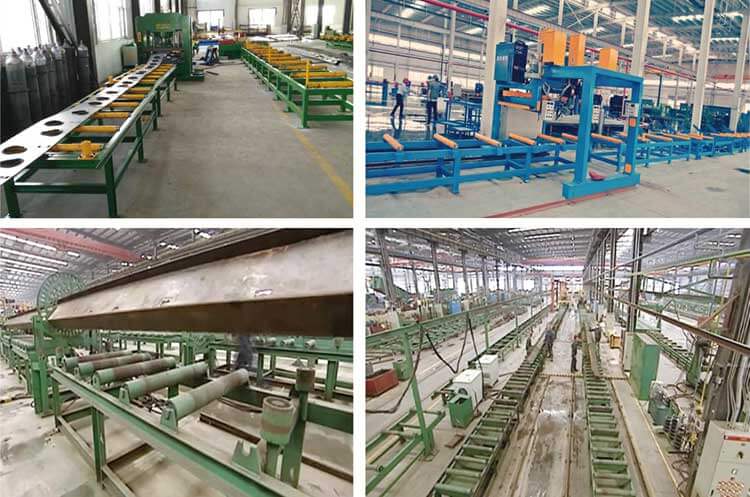
Trailer Manufacturing Production Line

Our trailer manufacturing line is designed around real production processes, not isolated machines.
By organizing equipment into clear manufacturing systems, we help trailer manufacturers build stable, repeatable, and scalable production lines—from longitudinal beam fabrication to full trailer frame assembly.

The line can be configured modularly according to trailer type, workshop space, and production capacity.

Manufacturing Scope

This production line is suitable for:

It covers the core manufacturing stages of beam processing, frame assembly, and structural panel production, with optional sub-assembly systems.

Flatbed semi-trailers
Lowbed and Special Structure Trailers
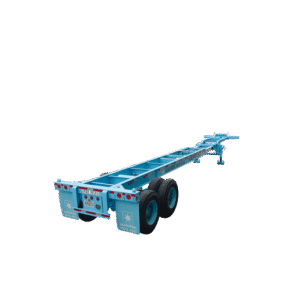
Skeleton / container chassis
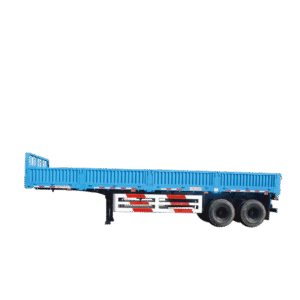
Sidewall and box-type trailers
Tank and Tanker Trailers
Manufacturing Scope

Why This Manufacturing Line Works

01.
Process-Driven Design

Equipment is organized according to real trailer manufacturing workflows, not standalone machine logic.

02.
Stable Geometry Control
Dedicated fixtures and controlled welding processes ensure consistent frame alignment and dimensional accuracy.
03.
Flexible Configuration
The line can be adapted to different trailer types, workshop layouts, and investment stages.
04.
Practical for Production Workshops
Designed with consideration for crane operation, space utilization, and daily manufacturing efficiency.
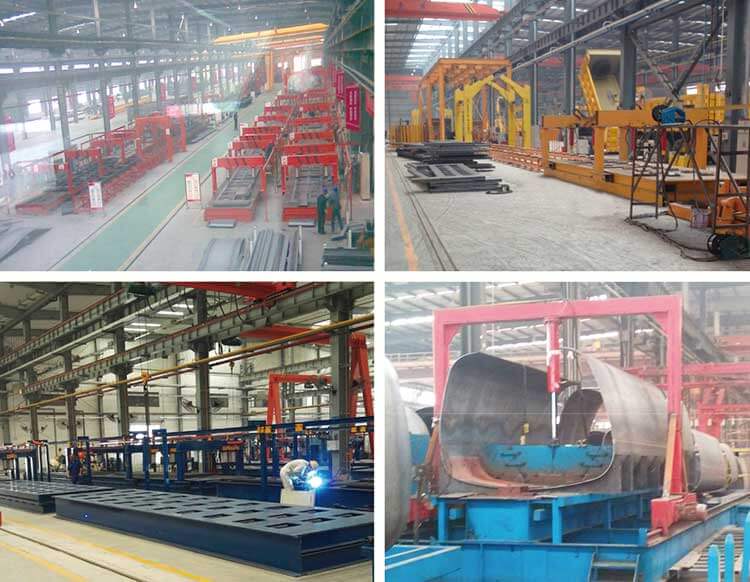
Production Lines Overview

Manufacturing Solutions for Different Vehicle Applications

These production lines are designed to support different vehicle manufacturing applications, including tanker trailers, semi-trailers, dump trucks, and component assembly.
Each line focuses on specific structural and process requirements, while sharing common manufacturing principles such as stable frame fabrication, standardized workflows, and flexible configuration to suit different workshop layouts and investment stages.

Product Coverage

The Tanker Production Line is designed for the manufacturing of tanker trailer chassis and structural frames.
It can be applied to the production of the following tanker-related products:

  • Fuel tanker trailers
  • Oil tanker trailers
  • Chemical tanker trailers
  • Water tanker trailers
  • Liquid transport tanker trailers
  • Special-purpose tanker trailers
  • Tanker trailer chassis (without tank body)
  • Tanker structural frames and mounting structures

The line focuses on the load-bearing chassis and frame structures required for tanker applications.
Tank body fabrication processes can be arranged separately or integrated as downstream operations.

Manufacturing Processes Covered

This production line covers the main manufacturing processes required for tanker chassis production, including:

  • Longitudinal beam processing and reinforcement
  • Web hole flanging for beam strengthening
  • Beam positioning and assembly
  • Automatic welding of longitudinal beams
  • Tanker chassis frame positioning and assembly
  • Structural welding of main frames and cross members

These processes form the core manufacturing steps shared by most tanker trailer designs.

Line Advantages

  • Designed specifically for tanker chassis and heavy-duty frame structures
  • Stable and repeatable manufacturing process
  • Improved frame straightness and dimensional consistency
  • Reduced dependence on manual welding skills
  • Suitable for standard and customized tanker chassis production
  • Can be integrated with downstream tank body production lines

The line supports both batch production and flexible manufacturing requirements.

Main Equipment Included

The tanker production line typically includes the following machines:

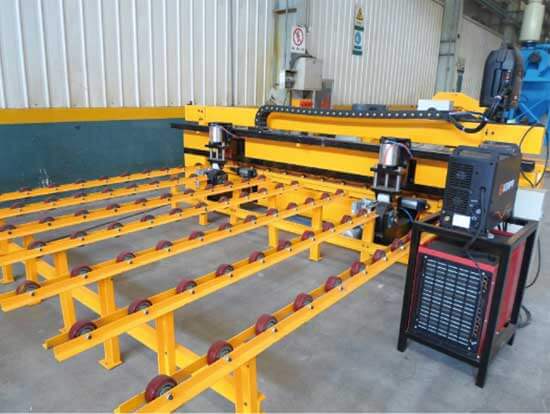
Flat Automatic Welding Machine

Used for automatic welding of semi-trailer bottom plates and side beams with precise seam tracking and continuous flat-position welding.

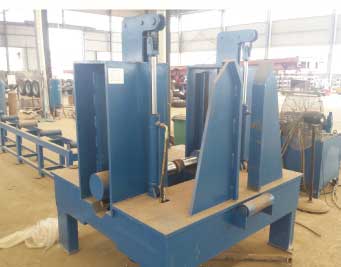
Hydraulic Pressure Vane Machine

Used for hydraulic pressing and forming of tank vanes, ensuring accurate positioning and consistent forming quality for subsequent welding processes.

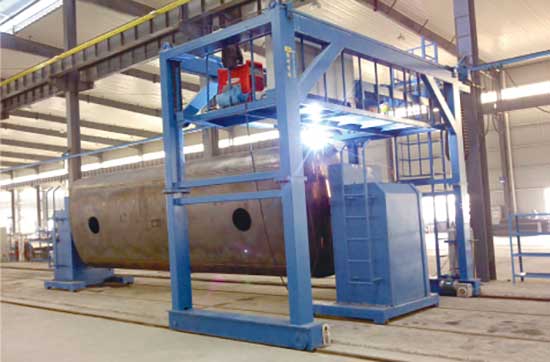
Shaped Tank Gantry Automatic Welding Machine

Used for automatic welding of shaped tanks with gantry structure, enabling stable and continuous welding along complex tank surfaces.

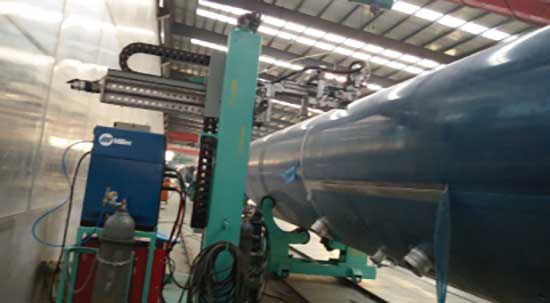
Easy Girth Automatic Welding

Used for automatic circumferential welding of tank shells, providing stable girth weld quality with simple operation.

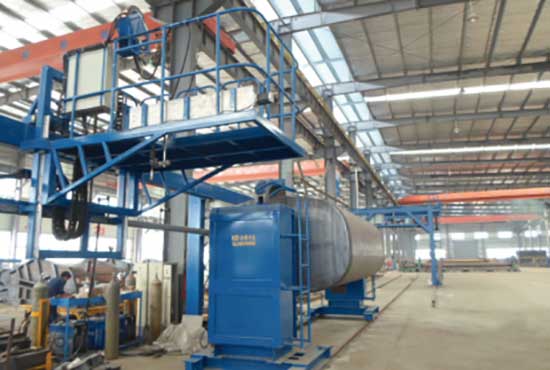
Shaped Tank Vertical Automatic Girth Welding

Used for vertical automatic girth welding of shaped tanks, suitable for large-diameter tanks with high welding consistency.

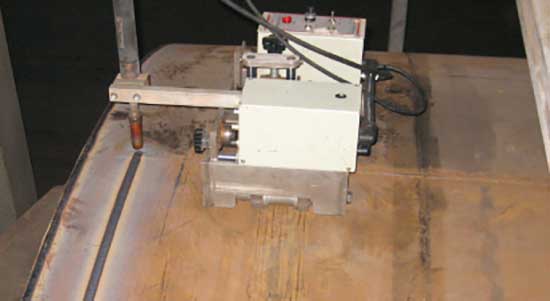
Tank Longitudinal Weld Automatic Welding

Used for automatic longitudinal welding of tank bodies, ensuring uniform weld seams and improved production efficiency.

Product Coverage

The Semi-Trailer Production Line is designed for the manufacturing of various types of semi-trailer chassis and structural components.
It is suitable for a wide range of standard and specialized semi-trailers, including:

  • Flatbed semi-trailers
  • Skeleton / container chassis trailers
  • Sidewall semi-trailers
  • Box-type semi-trailers
  • Curtain side trailers
  • Lowbed semi-trailers
  • Special-purpose semi-trailers
  • Semi-trailer chassis (without upper structure)
  • Structural frames and load-bearing assemblies

The line focuses on core frame and structural manufacturing, which is common across most semi-trailer designs.

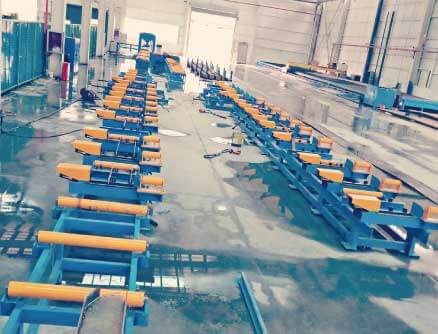
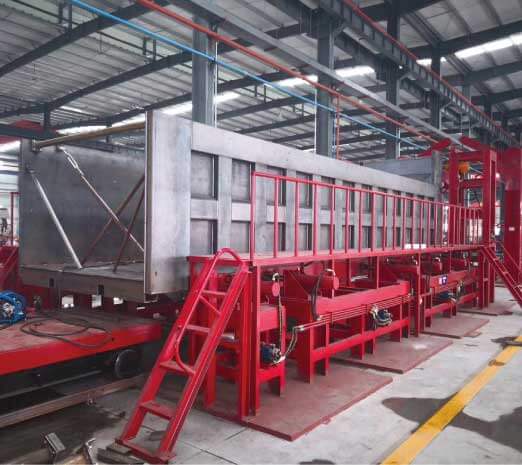
Semi-Trailer Production Line

Manufacturing Processes Covered

This production line covers the main manufacturing processes required for semi-trailer production, including:

  • Longitudinal beam processing and reinforcement
  • Web hole flanging for beam strengthening
  • Beam positioning and assembly
  • Automatic welding of longitudinal beams
  • Semi-trailer chassis frame positioning and assembly
  • Structural welding of frames and cross members
  • Corrugated plate forming and welding (for sidewall / box-type trailers)

These processes allow different semi-trailer types to be manufactured on a shared production platform.

Line Advantages

  • Suitable for multiple semi-trailer types on one production line
  • Clear and standardized manufacturing workflow
  • Stable frame geometry and consistent welding quality
  • Reduced manual operation and rework
  • Flexible configuration based on trailer type and output
  • Easy integration with downstream painting and finishing lines

The line supports both standard models and customized semi-trailer production.

Main Equipment Included

The semi-trailer production line typically includes the following machines:

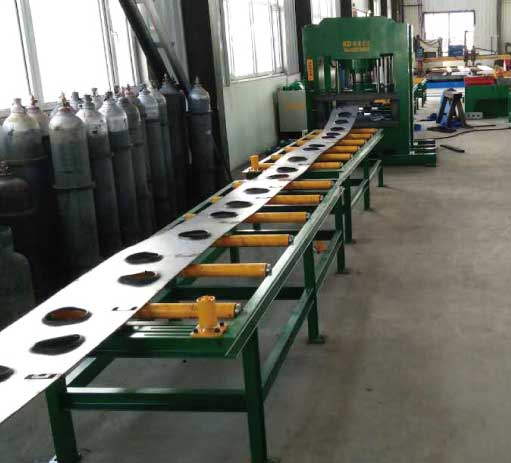
Stringer Web To Strengthen The Hole Flanging Machine

Used for flanging and strengthening holes on stringer webs, ensuring accurate hole positioning and improved structural strength.

Wing Molding Machine

Used for press forming and bending of upper and lower wing stringers, with adjustable R-arc forming according to design requirements.

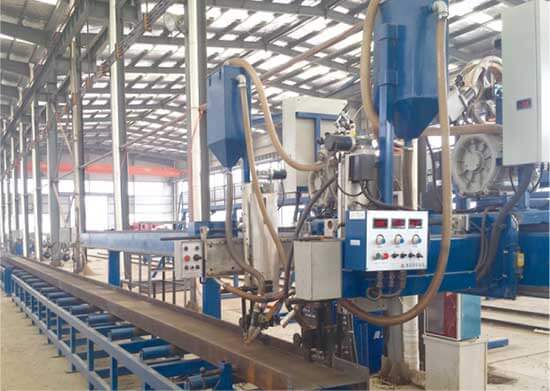
Longitudinal Beam Double Gun Submerged Arc Welding Machine

Used for double-gun submerged arc welding of longitudinal beams, enabling simultaneous welding of two seams with high efficiency.

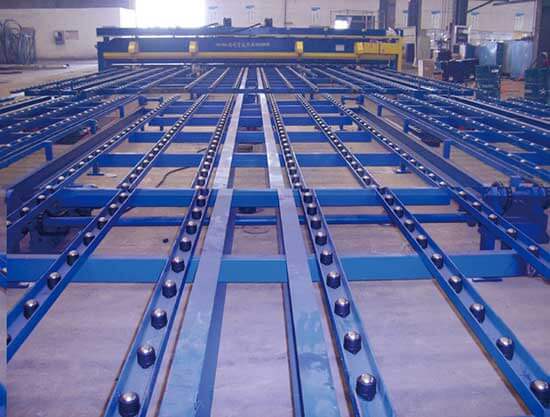
Longitudinal Beam Assembly Fixture

Used for positioning and assembly of longitudinal beam components, ensuring accurate alignment of wings and web plates.

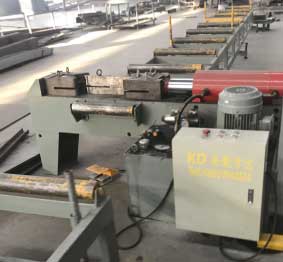
Longitudinal Beam Straightening Machine

Used for correcting welding deformation of longitudinal beams, straightening upper and lower wings without beam turnover.

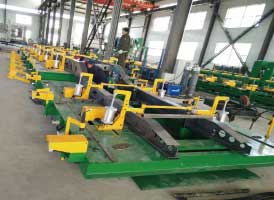
Trailer Frame Assembly Fixture

Used for assembly of semi-trailer frames, including positioning of longitudinal beams, side beams, and cross members.

Product Coverage

The Dump Truck Production Line is designed for the manufacturing of dump truck chassis structures and related body components.
It is suitable for the production of various dump truck configurations, including:

  • Light-duty dump trucks
  • Medium-duty dump trucks
  • Heavy-duty dump trucks
  • Mining dump trucks
  • Construction dump trucks
  • Tipper truck bodies and frames
  • Dump truck chassis structures
  • Special-purpose dump truck bodies

The line focuses on structural frame fabrication and body-related components required for dump truck applications.

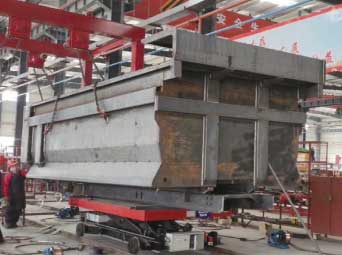
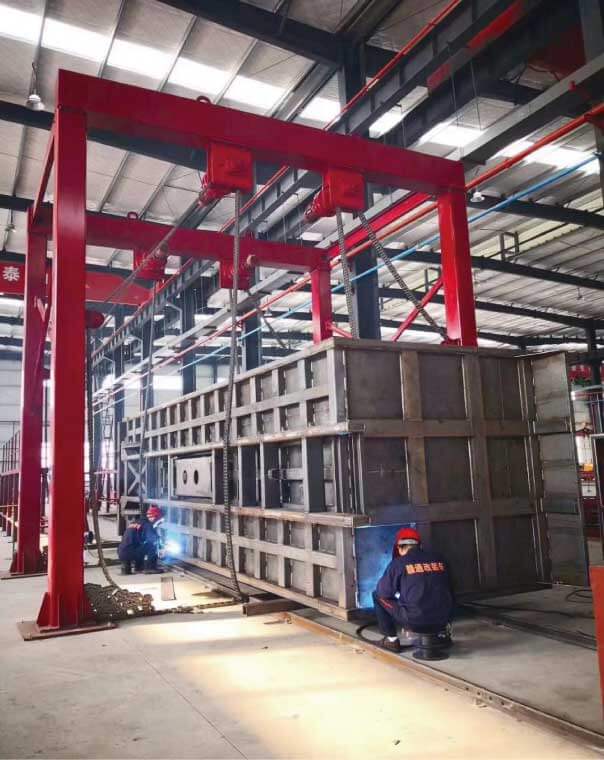
Dump Truck Production Line

Manufacturing Processes Covered

This production line covers the main manufacturing processes required for dump truck production, including:

  • Structural beam processing and reinforcement
  • Beam positioning and assembly
  • Automatic welding of load-bearing structures
  • Chassis and body frame positioning and assembly
  • Structural welding of dump bodies and frames
  • Plate forming and structural panel welding

These processes support both standard dump trucks and reinforced models for heavy-duty use.

Line Advantages

  • Suitable for different dump truck tonnage classes
  • Strong adaptability to reinforced structures
  • Stable and repeatable welding quality
  • Reduced manual welding workload
  • Flexible configuration for different body designs
  • Compatible with shared equipment from semi-trailer production lines

The line supports efficient and scalable dump truck manufacturing.

Main Equipment Included

The dump truck production line typically includes the following machines:

Bottom Plate Side Plate And Front Plate Assembly Fixture

Used for assembly and positioning of bottom, side, and front plates of dump truck bodies, supporting efficient box body assembly.

Hydraulic Lift Transport Vehicles

Used for lifting, conveying, and rotating heavy workpieces to enable flexible and efficient material transfer along the production line.

Chain Variable-Bit Machine

Used for turnover and rotation of large and irregular workpieces, such as frames and tanks, with controlled and stable flipping motion.

Product Coverage

The Assembly Line is designed for the assembly of trailer and truck sub-components and structural modules.
It is suitable for use across different vehicle types and production lines, including:

  • Semi-trailers
  • Tanker trailers
  • Dump trucks
  • Trailer and truck suspension systems
  • Structural sub-assemblies and modules

The assembly line supports standardized assembly operations that are shared across multiple product categories.

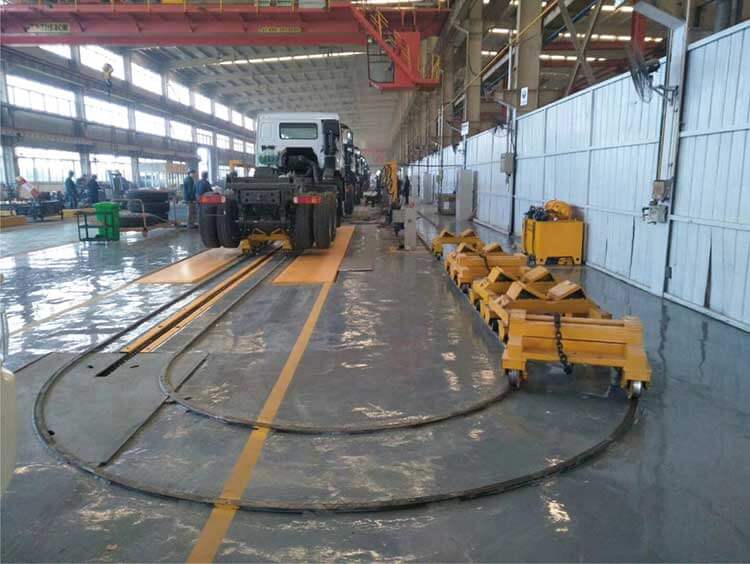
Assembly Line

Manufacturing Processes Covered

This assembly line covers the main assembly processes required for vehicle and component production, including:

  • Suspension and spring assembly
  • Sub-assembly of structural components
  • Component positioning and assembly
  • Standardized module preparation for main production lines

These processes help improve overall production rhythm and consistency.

Line Advantages

  • Suitable for multiple vehicle types and production lines
  • Standardized and repeatable assembly process
  • Reduced manual variability
  • Improved production efficiency and takt control
  • Easy integration with main production lines

The assembly line serves as a supporting and stabilizing production system.

FAQ

Trailer Line Planning & Delivery

Yes.
This manufacturing line is widely used for tank and tanker trailer chassis and structural frame production, including longitudinal beams, main frames, and cross members.
Tank body rolling, welding, and pressure testing are typically handled in independent downstream processes and can be connected separately.

Yes.
The core beam manufacturing and frame assembly lines are shared across flatbed, container chassis, tanker, and box-type trailers.
By adjusting fixtures and process settings, manufacturers can produce multiple trailer models on the same manufacturing platform.

No.
Many manufacturers start with the longitudinal beam manufacturing line and frame assembly line, then add panel processing or sub-assembly lines as production volume increases.
The system is designed for phased investment and gradual expansion.

Frame accuracy is controlled through:

  • Dedicated beam and frame assembly fixtures

  • Stable positioning and clamping during welding

  • Controlled welding sequences

This approach helps ensure consistent geometry and reduced rework, especially for long trailer frames.

No.
The panel and corrugated plate processing line is optional and mainly used for sidewall and box-type trailers.
For flatbed, skeleton, and tanker trailers, this module is usually not required.

Yes.
The production line can be configured based on:

  • Workshop size and crane capacity

  • Existing cutting, machining, or painting processes

  • Required production flow and takt time

Line layout planning can be adjusted to fit both new factories and upgraded workshops.

The line is suitable for small to medium batch production as well as higher-volume manufacturing, depending on configuration.
Station quantity, automation level, and takt time can be adjusted according to your target output.

To prepare a practical proposal, the following information is usually required:

  • Trailer types and main dimensions

  • Monthly or daily production target

  • Workshop layout and available space

  • Power supply and lifting conditions

Based on this, a process-oriented line configuration can be recommended.

Yes.
The manufacturing line is modular by design, allowing future upgrades such as:

  • Additional automatic welding stations

  • Expanded sub-assembly lines

  • Improved material handling integration

This helps protect long-term investment as production requirements evolve.

Support can be provided for:

  • Line layout confirmation

  • Equipment installation guidance

  • Trial production and commissioning

This helps ensure the line transitions smoothly from installation to stable production.

Send Us a Message